Product + Hardware

Your Watch Can Eject Water. Your Phone Cannot. That Is Not an Oversight.

A missing feature is rarely laziness. Usually it is a hardware affordance, a marketing commitment, and a legal position failing to line up — and the water eject button is the cleanest example of that I have found.

July 20269 min readProduct Design

TL;DR

  • The Apple Watch ejects water by playing a low-frequency tone through its speaker. The software is the easy part. The speaker cavity was designed with an escape path, and that is the actual feature.
  • A phone is not one cavity, it is a dozen. Two speakers, three or four microphones, a charging port, a SIM tray. Clearing one opening leaves the rest exactly as wet as they were.
  • The part that actually kills phones cannot be vibrated. Water plus charging pins plus current equals corrosion, and the port has no acoustic path. So manufacturers ship a liquid detection alert instead.
  • It is not impossible, it is a choice. Several Android manufacturers have shipped a water eject toggle. Apple has not put one on the iPhone.
  • Ejection clears trapped water outside the seal. It does not undo submersion. Once water is past the gaskets, no tone is bringing it back out.

A kayak, and a phone that never recovered

A few months ago I was on holiday, stranded off the water after a kayaking incident that went the way these things go. Several of our phones went in. Mine came out, looked fine, and then quietly deteriorated over the following weeks — the battery first, in the way that batteries do when something has got in and started corroding what it touches.

At the time, the thing I kept circling was that my watch had a button for exactly this and my phone did not. There is a well-known feature on the Apple Watch: tap it, the speaker makes a sound like a small angry frog, and water sprays out of the side. My phone, sitting in the same salt water, had nothing. To get anywhere near the same effect I had to find a video of a tone on YouTube and hope.

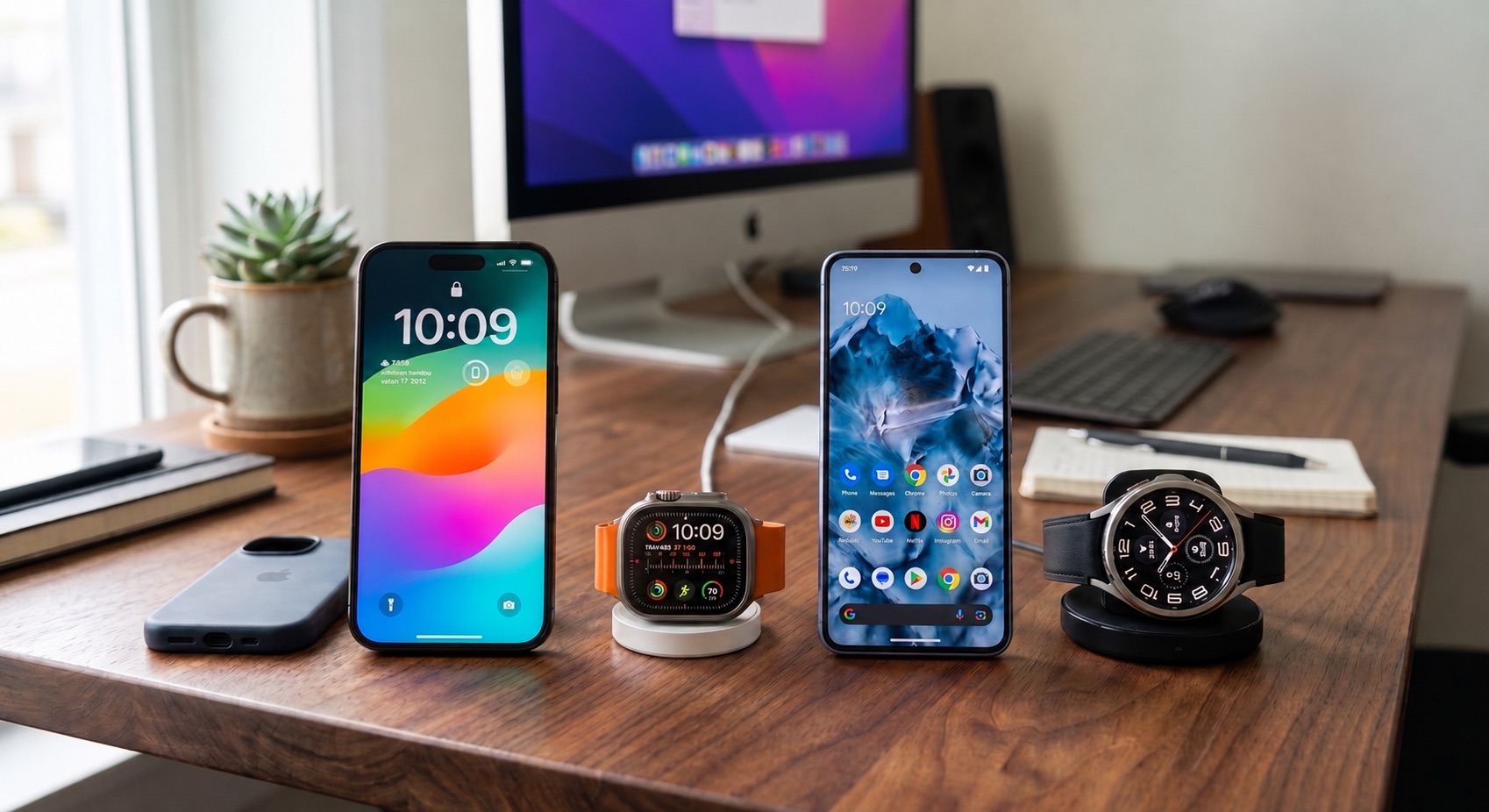
Two phone-and-watch pairs on a wooden desk: an iPhone beside an Apple Watch Ultra on its charging puck, and a Pixel phone beside a Galaxy Watch on its charger. Both watches can drive water out of their own speakers. Neither phone ships the feature.
Four devices, two ecosystems, one asymmetry. Both watches can clear their own speakers; neither phone has the button.

The obvious explanation is that nobody bothered. The obvious explanation is wrong, and the real one turns out to be a much better story about how features come to exist at all.

Eject shipped

2016

Apple Watch Series 2

Italian AGCM fine

€10M

Water-resistance claims, 2020

The rating

IP68

Still, fresh water. In a lab.

What the watch is actually doing

The mechanism is charmingly blunt. The Watch plays a series of low-frequency tones through its own speaker, loud enough that the moving diaphragm breaks the surface tension holding water inside the cavity and pushes it back out through the same hole it came in. There is no pump, no valve, no clever material. It is a speaker being used as a piston.

Which means the software is trivial. You could write it in an afternoon. The part that took engineering is the hole: a shallow, single acoustic port with a deliberate escape path, designed from the beginning on the assumption that water would need to leave it. Apple built the cavity for the feature, then wrote the tone to use it.

The feature is not the button. The feature is the shape of the hole, and the button is what you get to add once the shape is right.
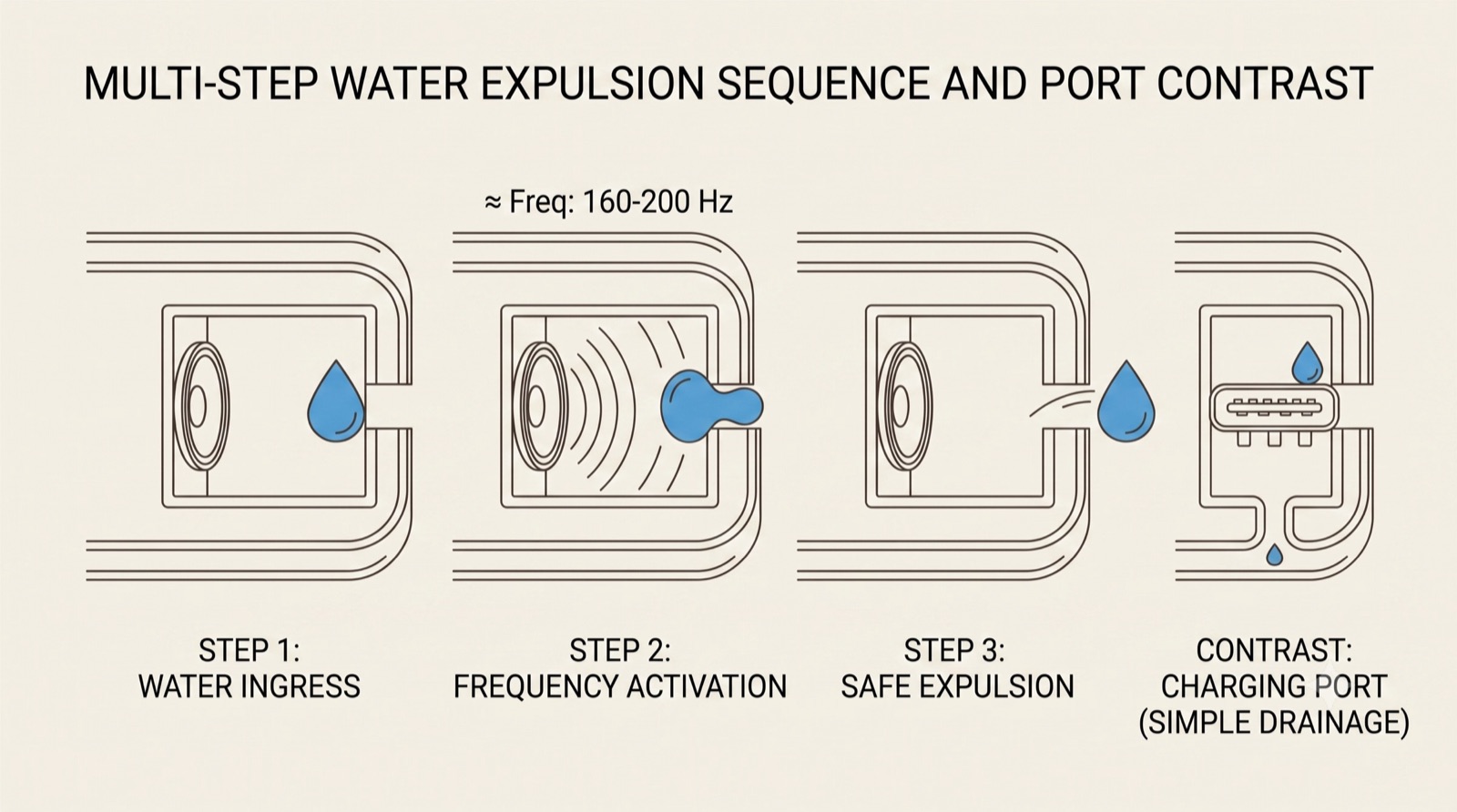
Diagram of a speaker cavity in three steps: a water droplet resting in the chamber against the port, the diaphragm oscillating with visible sound waves pushing the droplet toward the opening, and the droplet clear of the chamber. A fourth panel shows a USB-C port beside the same cavity, with no equivalent mechanism to push water out.
Three steps, one cavity: the diaphragm does the work of a piston. The charging port, alongside it, has no equivalent move to make.

And the cavity got designed that way because of a decision made much earlier and much further up: swim tracking is a headline feature of the product. Once you sell a watch that people wear in a pool, on purpose, repeatedly, for exercise, you have committed to solving “this device will be fully submerged and then need to work.” Water Lock and the eject tone are downstream of a marketing promise, not upstream of it.

Why a phone is a genuinely harder problem

The instinct is that a phone has a bigger, louder speaker, so it should be easier. The speaker is not the constraint. The count is.

A watch has one acoustic opening. A modern phone has a bottom speaker, an earpiece speaker that doubles as the second channel, three or four microphones scattered around the chassis for calls and noise cancellation and video, a charging port, a SIM tray, and the seams around every button. Water goes into all of them. Vibrating the bottom speaker clears the bottom speaker.
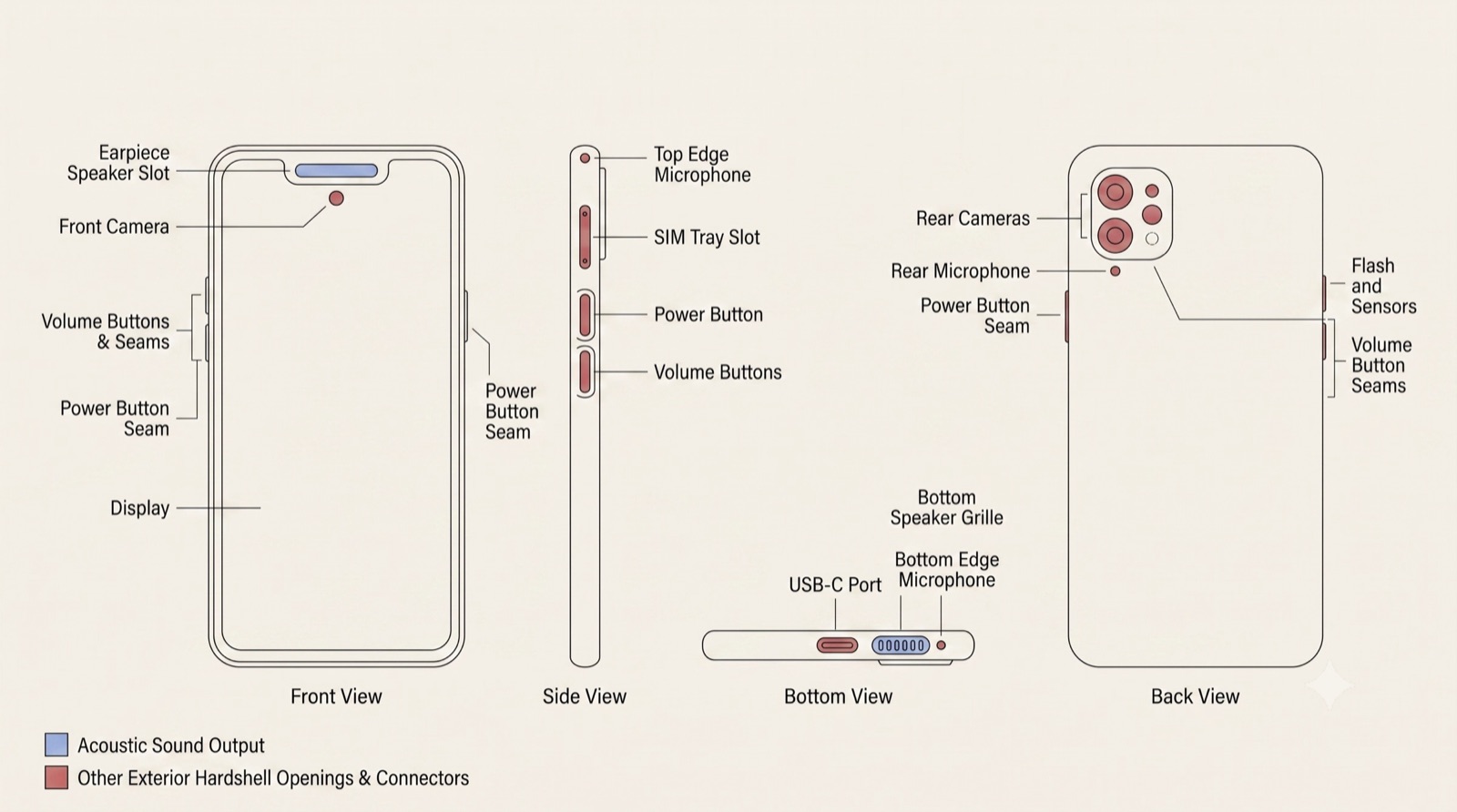
A phone shown from the front, side, bottom, and back, with every exterior opening marked: earpiece speaker, front camera, volume and power button seams, top microphone, SIM tray, bottom speaker grille, USB-C port, bottom microphone, rear cameras, rear microphone, and flash. Acoustic sound output is marked in blue; every other opening and connector is marked in a second colour.
One blue opening a tone can clear. Everything else on this phone is a separate problem.
OpeningCan a tone clear it?Why
Bottom speakerYesOne shallow cavity, one exit. This is the opening everybody means.
Earpiece speakerPartlyA narrow slot behind a mesh. Water clings by surface tension and often stays.
Microphones (three or four)NoToo small to drive acoustically. They are ports, not speakers.
USB-C / Lightning portNoNo acoustic path at all. This is also the one that corrodes.
SIM trayNoGasketed. If water is past it, the seal has already failed.
Button seams and enclosure joinsNoSealed by adhesive and gaskets. Water here is a repair, not a feature.

Read down that table and the shape of the problem gets clear. The one opening a tone reliably clears is the one whose failure mode is mildly annoying — muffled audio for a day. The openings that actually cost you a phone are the ones where acoustic ejection has nothing to push against.

The charging port is the real villain

Water in a USB-C or Lightning port is not an acoustics problem, it is an electrochemistry problem. Wet contacts plus applied current equals corrosion, fast, and it does not stop when the phone dries. This is why the actual shipped solution is not ejection at all: it is detection. Both Apple and Samsung will refuse to charge and throw an alert when they sense liquid in the connector, because interrupting the current is the intervention that matters. Same underlying problem, completely different answer, chosen because it is the one that works on the opening that counts.
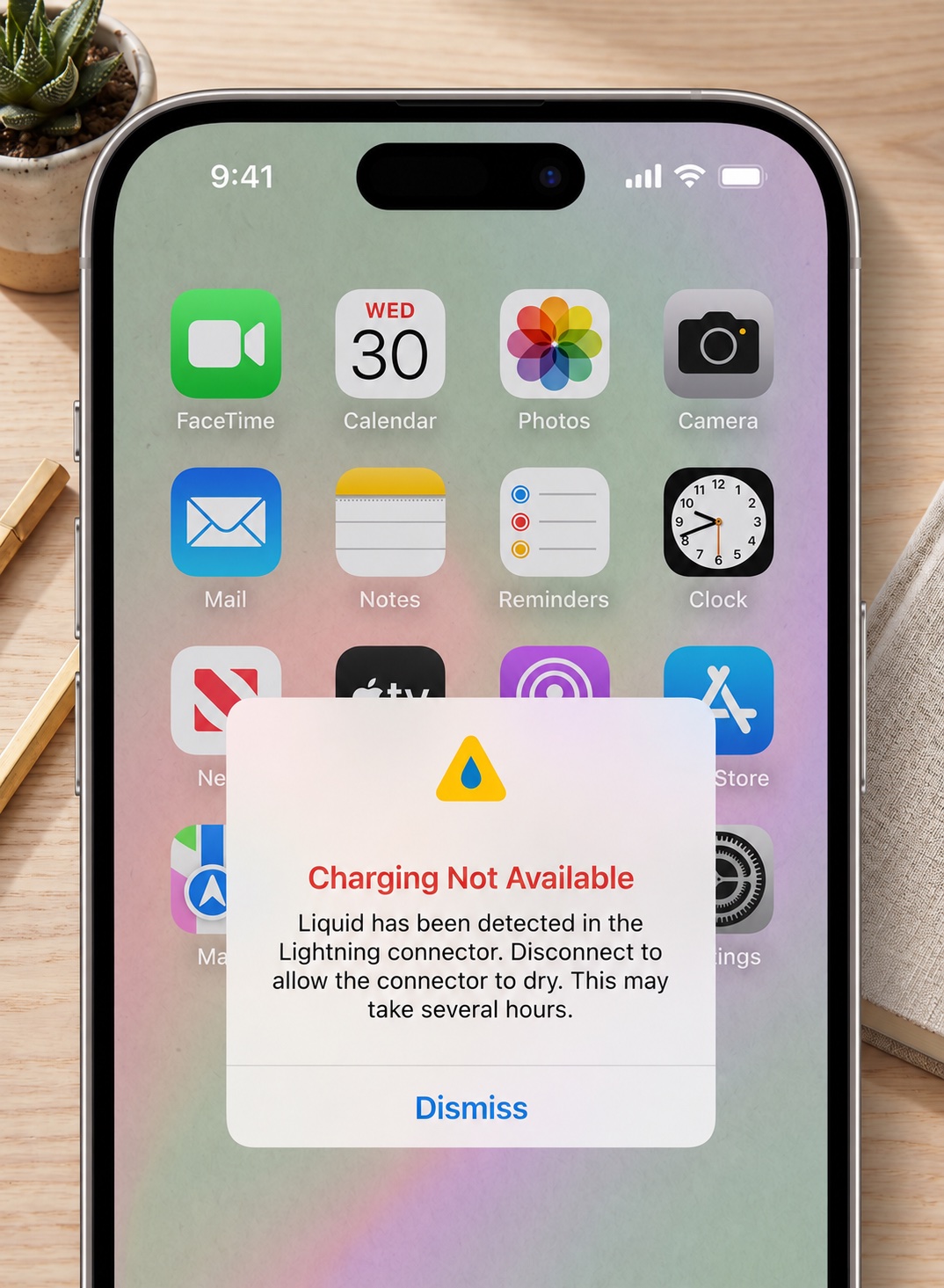
An iPhone lock screen showing a system alert: 'Charging Not Available. Liquid has been detected in the Lightning connector. Disconnect to allow the connector to dry. This may take several hours.' with a single Dismiss button.
The shipped answer to the charging port. Not a tone. A refusal, and a wait.

I did it anyway. Not out of ignorance — I knew what charging a wet phone does. But charging makes heat, and heat dries things, and when you are watching a battery percentage fall you will believe a theory that offers you something to do. The theory is not even wrong about the heat. It is wrong about the timing: the warmth evaporates a little moisture, while the voltage across wet contacts corrodes them far faster than that. The mechanism that helps is slower than the mechanism that hurts.

If it happens to you

Do not charge it. Leave it off, upright, somewhere dry with air moving. Not rice — it does nothing that open air does not do better, and it introduces dust and starch into the ports.

It is not impossible. It is a decision.

Here is the part that keeps this from being a straightforward engineering story. Phones can do this. The web is full of pages that play a 165 Hz tone and they do genuinely push water out of a phone speaker, imperfectly, because the physics does not care whose product it is. And several Android manufacturers have shipped it as a real feature rather than leaving it to third-party sites — Xiaomi has included a water eject function in its software, and Samsung has offered one through its Members app in some regions, borrowed from the Galaxy Watch.

Worth checking before you rely on this

Feature availability across Android manufacturers moves constantly and varies by region and software version. The claim that matters here is only that it has been shipped by more than one company, which establishes it as a product decision rather than a technical barrier.

So when a capability exists, is cheap to implement, and has been demonstrated by competitors, and a company still does not ship it, the reason is usually not in the engineering department.

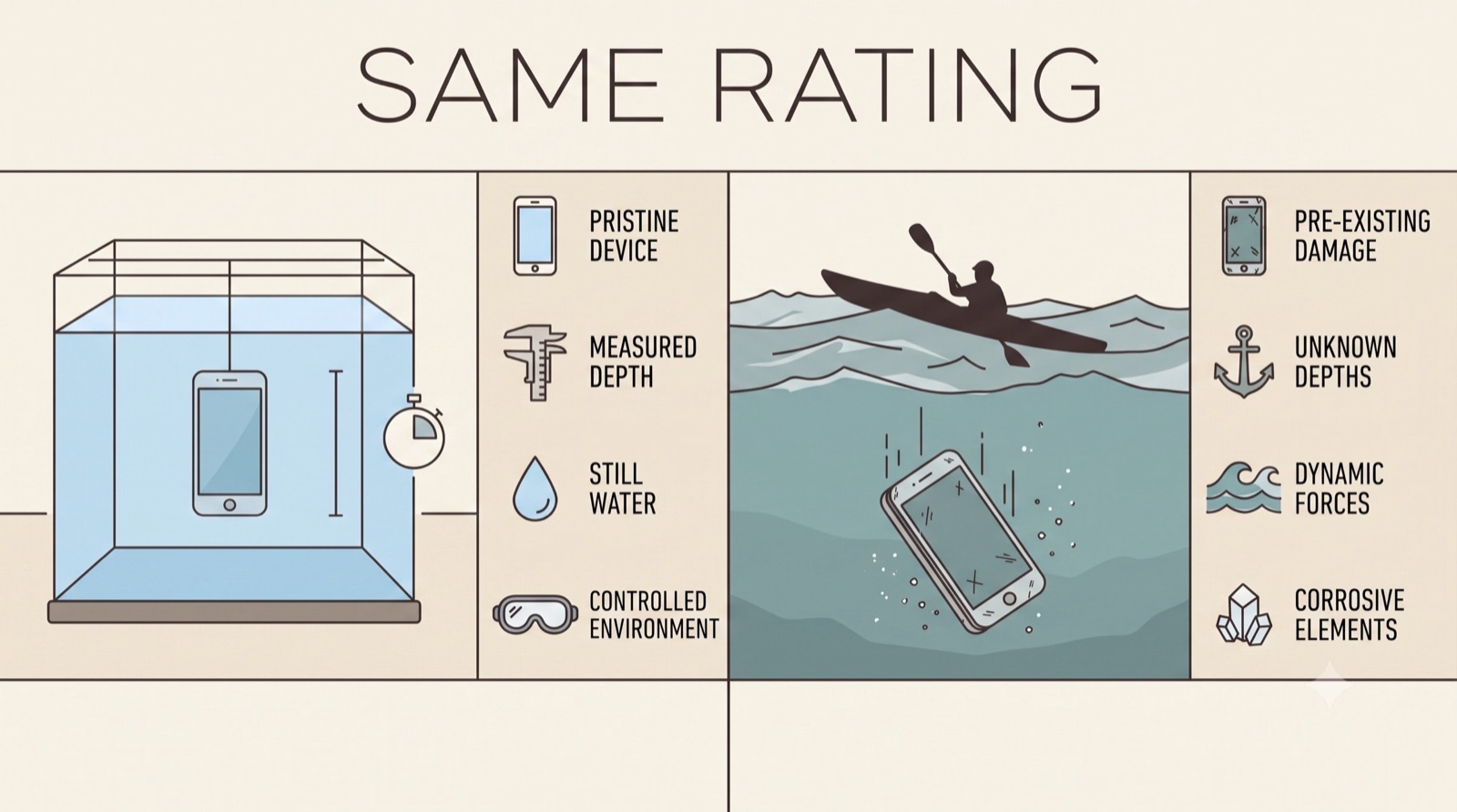
Phones are rated IP68. That rating is earned in a lab, in still, fresh water, at a specified depth for a specified time. A sea kayak is none of those conditions: salt water is conductive and corrosive in a way tap water is not, moving water applies pressure the test does not, and the seals themselves age. Adhesive weakens, gaskets compress, a phone that has been dropped once is not the phone that got certified. Manufacturers say this out loud in the fine print — water resistance is described as a condition that diminishes over time, not a permanent property.

At the same time, liquid damage is excluded from the standard warranty, and there is a Liquid Contact Indicator inside the chassis that turns red on exposure, specifically so a technician can decline the claim. The company is simultaneously telling you the device survives water and telling you it will not cover water.

That tension is not hypothetical. In 2020 Italy’s competition authority fined Apple in the region of €10 million over exactly this: marketing water resistance in terms that consumers read as a general promise, while testing under lab conditions and then refusing liquid-damage repairs under warranty. When that is your recent history, a prominent button in Settings labelled for getting your phone wet is a liability written in the user interface.

Split illustration labelled 'Same Rating'. Left: a pristine phone lowered on a string into a glass tank of still water, measured depth, a timer, and safety goggles beside it, labelled pristine device, measured depth, still water, controlled environment. Right: a kayaker on choppy open water, with a phone tumbling below the surface showing scratches and cracks, labelled pre-existing damage, unknown depths, dynamic forces, corrosive elements.
IP68 describes the tank on the left. Nobody is kayaking in the tank.

Apple Watch

  • Hardware affordanceOne speaker cavity, shaped so water can be driven back out the way it came in.
  • Marketing commitmentSwim tracking is a headline feature. Submersion is the advertised use, not the accident.
  • Legal postureAlready promising the device survives a pool. The button is consistent with the promise.

Phone

  • Hardware affordanceA dozen openings, most with no acoustic path. Clearing one leaves the rest wet.
  • Marketing commitmentRated to survive a drop in the sink. Nobody sells a phone as swimwear.
  • Legal postureLiquid damage sits outside the warranty. A button labelled for water reads as an invitation.

The distinction that makes the whole thing click

There is one more thing worth being honest about, and it is the part that sharpened this for me rather than dulling it. If water got far enough into my phone to degrade the battery, eject would not have saved it. Not even a little.

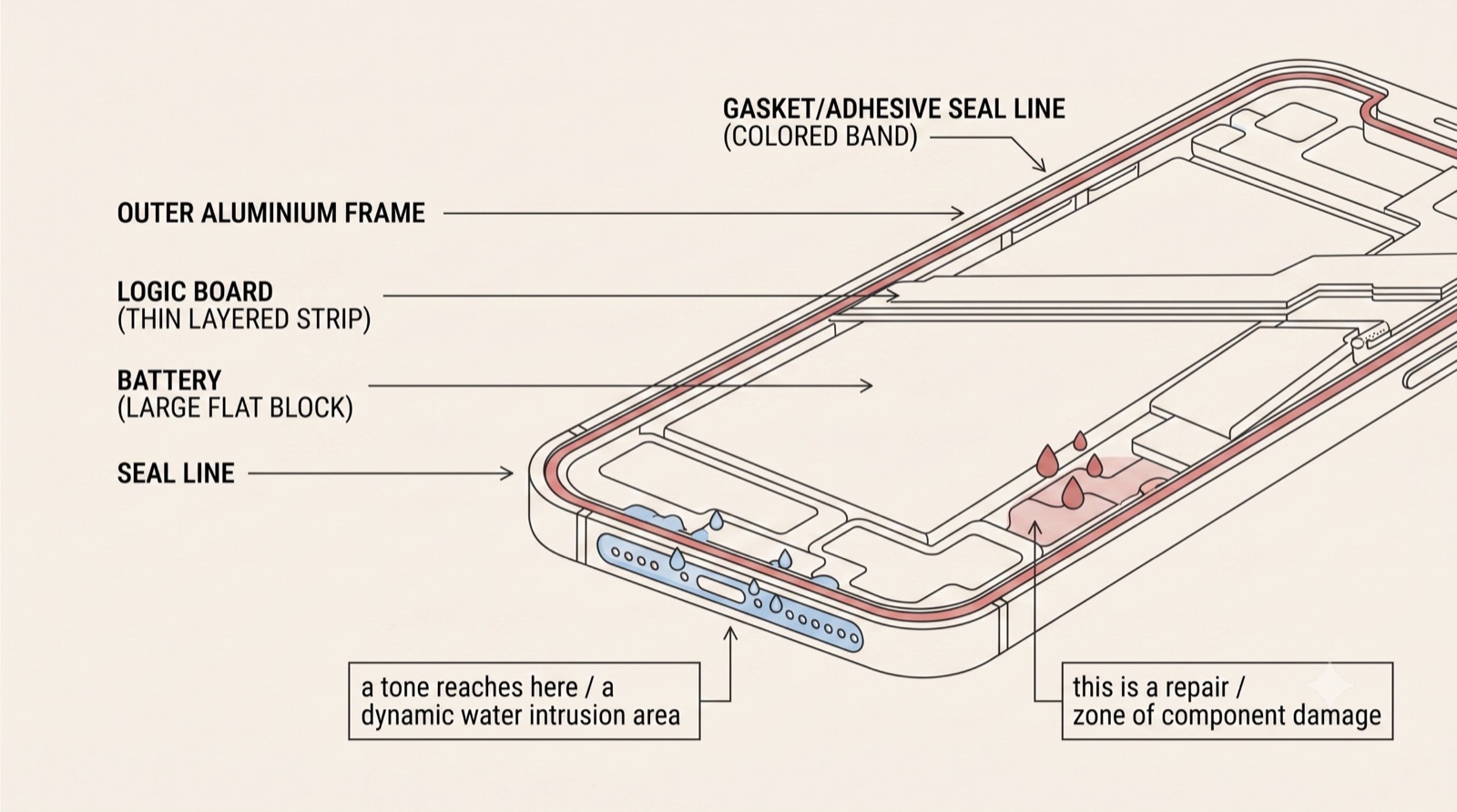
Water ejection addresses water trapped in a cavity that is still on the outside of the sealed enclosure. Your speaker grille is not inside the phone in any meaningful sense; it is a pocket in the exterior. What ruined my battery was water that had crossed the seal, and nothing on the other side of that boundary can be reached by a tone from a speaker sitting on the near side of it.

Exploded cross-section of a phone's bottom corner, showing the outer aluminium frame, a gasket and adhesive seal line running the perimeter, and inside the seal the battery and logic board. Blue droplets sit in the exterior speaker and port cavity, labelled 'a tone reaches here.' Red droplets sit past the seal line near the battery and board, labelled 'this is a repair.'
Two colours, one seal line between them. A tone only ever operates on the blue side.

The feature people want is “undo my submersion.” The feature that exists is “clear my speaker grille.” They are not the same feature, and almost everyone conflates them.

Which reframes my original complaint entirely. I was not annoyed that my phone lacked a button. I was annoyed that my phone was dying, and I had reached for the nearest visible feature that seemed related. The button would have done nothing. Nobody markets it that way, because a feature that says “this clears a small amount of water from one specific hole under conditions where you were probably fine anyway” does not fit on a slide.

What this generalises to

I keep coming back to this one because it is such a clean specimen. Three separate things had to be true before the Apple Watch could have a water eject button, and only one of them was code.

The hardware had to be shaped to permit it, which meant somebody decided years earlier, at the industrial design stage, that this mattered. The company had to have already committed publicly to the use case, because a feature that contradicts your marketing is a feature nobody will approve. And the legal position had to be able to absorb it, because a control that encourages a behaviour your warranty excludes is a problem your support organisation inherits.

Miss any one of the three and the feature does not ship, no matter how easy it would be to build. That is worth remembering the next time something obvious is missing from a product and the explanation on offer is that the team did not think of it. They thought of it. It is the most obvious idea in the category. Something further up the stack was not in a position to say yes.

The intervention arrives at the wrong moment

There is a second gap here, underneath the first one, and it has nothing to do with buttons. It is about timing, and Apple has already solved it elsewhere on the same device.

Crash Detection and Fall Detection do not wait for you to do anything. They infer an event from motion, decide something serious probably just happened, and act on their own initiative — counting down to a call, surfacing an alert, regardless of whether you ever open an app or press a button. The phone speaks up because of what it inferred, not because of what you did next.

Liquid detection does not work that way. It is gated behind the one action it exists to prevent: you only find out the port is wet when you go to plug in a cable. Dry the phone, leave it alone, never charge it that day, and the phone says nothing. It has no equivalent of “I felt something happen, let me tell you before you ask.” It only speaks once you have already reached for the exact cable it wants you not to use.

The phone already knows how to notice an event on its own initiative. It just hasn’t been taught that a kayak going over is one of them.

Put next to the crash detection model, the shape of the gap changes. It is not really that phones lack a way to warn you. It is that the warning is wired to the wrong trigger — an attempted action, instead of an inferred event. The moment I actually needed my phone to tell me something was not when I plugged in a charger back on dry land. It was the moment I climbed back into the boat, soaked, with a phone that had just gone underwater and had no way of saying so.

I still think phones should ship the button. Not because it would have saved my phone — it would not have — but because the alternative is what I actually did, which was plug it in against my own better judgement and then play an unverified tone from a video of unknown provenance at full volume into a device I was already worried about. When a real need has no supported path, people invent one, and they will do it knowingly, with a bad theory, because doing nothing is the one thing panic will not permit. That is usually the strongest argument for building the thing.

References

  • Apple Support: Use Water Lock and eject water from your Apple Watch (support.apple.com)
  • Apple Support: If you see a liquid-detection alert on your iPhone (support.apple.com)
  • Apple Support: Use Crash Detection on iPhone and Apple Watch (support.apple.com)
  • Apple Support: Use Fall Detection with Apple Watch (support.apple.com)
  • Apple Support: Liquid Contact Indicators and what water damage covers (support.apple.com)
  • AGCM (Italian Competition Authority), Press Release PS11147/PS11039 on Apple water-resistance claims, November 2020
  • IEC 60529: Degrees of protection provided by enclosures (IP Code)
  • Samsung: Water eject via the Samsung Members app (samsung.com, availability varies by region)
  • iFixit: Why rice does not fix a wet phone (ifixit.com)